


Choosing Chemical Protective Clothing (CPC) in Asia-Pacific
Beyond Compliance, Toward Practical Protection
Important Disclaimer: This article is intended for general informational purposes only and does not constitute legal or regulatory advice. PPE requirements and enforcement practices may vary by country and over time. Users should confirm applicable requirements with local authorities and relevant internal functions
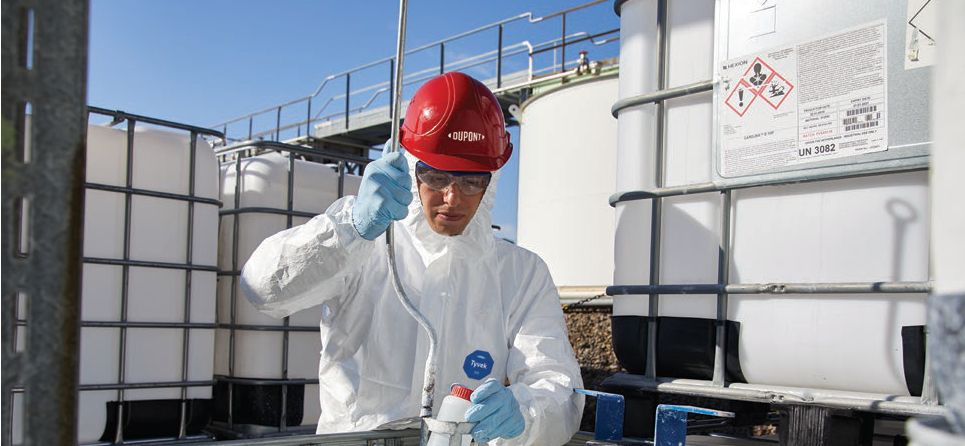
In high-risk workplaces, PPE is often the last line of defense, and poor selection can increase the likelihood of injury or illness. It can also expose organizations to compliance gaps, operational disruption, and reputational risk.
Compliance is the starting point for PPE selection. Standards and certification set the minimum requirements for placing PPE on the market and provide a baseline for safety performance. However, compliance alone does not ensure the same level of protection in practice. Products that meet the same standard can still perform differently as their properties may exceed the minimum compliance requirements, depending on fabric, seam construction, garment design, and suitability for the actual hazard. In Asia-Pacific, where regulatory maturity and enforcement vary by country and region, a practical approach is to begin with local compliance requirements and then evaluate performance evidence, whether it is third party certified and supplier capability. This helps move PPE selection beyond regulatory compliance toward protection in actual use conditions.
Step 1 - Understand the Regulatory Requirements in Your Country or Region
Unlike Europe, where PPE compliance is legally mandated under Regulation (EU) 2016/425 and requirements are broadly consistent and enforceable, Asia-Pacific has a more diverse and fragmented regulatory landscape. Chemical Protective Clothing (CPC) requirements vary by country, product type, application, and jurisdiction, while enforcement may also differ by industry and local practice. For businesses operating across the region, understanding these differences is important for meeting compliance obligations and reducing protection gaps. The following provides a high-level overview of CPC regulatory frameworks and market practices in selected countries and regions. It is indicative only and not a comprehensive reference. Readers should refer to the latest official sources for current requirements.
Australia and New Zealand
AS/NZS 4501.1:2008 (Reconfirmed 2020) provides general guidance on the selection, use, and maintenance of protective clothing, including CPC, but does not establish specific performance or certification requirements for chemical protection, and the ANZ market therefore largely relies on EN or ISO standards and CE marking for product validation and selection.
Mainland China
GB 24539-2025 establishes the national technical standard for CPC, defining classification, technical requirements, test methods, and marking provisions, and applies to workplace and emergency response use cases, while compliance is primarily based on adherence to GB standard requirements and associated labeling rather than a unified mandatory product certification or marking system specific to CPC.
India
IS 15071:2002 establishes a national standard for CPC, defining general specifications and selection considerations, but certification under the BIS framework is not uniformly mandated for CPC, and the market therefore largely relies on EN or ISO standards and CE marking for performance validation and product selection.
Japan
JIS T 8115:2015 establishes the baseline standard for CPC, and additional guidelines for body protection PPE have been developed by the Ministry of Health, Labor and Welfare to support proper selection and use, while product certification is conducted under the JIS Mark scheme through accredited certification bodies, and only products verified by such accredited organizations are recognized as certified for market acceptance.
Republic of Korea
MoEL Notice No. 2023-64 establishes a regulatory safety certification framework for designated personal protective equipment categories, including CPC, requiring certification through authorized bodies such as KOSHA and compliance with the national KCs marking system before market entry, while additional requirements and guidance on the selection and use of personal protective equipment for hazardous chemical handling are provided by the National Institute of Chemical Safety (NICS) under the Ministry of Environment to support appropriate workplace application.
Malaysia
DOSH establishes regulatory approval requirements for designated personal protective equipment categories, including CPC, requiring full type testing and certification through appointed bodies such as SIRIM QAS, and products must obtain DOSH approval and certification labeling before being placed on the market.
Taiwan
Taiwan applies CNS 16103:2019 as a national standard for CPC, defining general technical requirements and testing approaches, but does not operate a dedicated mandatory certification or marking system for CPC, and market practices are largely aligned with internationally recognized standards systems, including ISO, EN, ASTM and NFPA, for performance validation and product selection.
Step 2 - Look Beyond Compliance to Performance Evidence
Meeting applicable standards and local regulatory requirements indicates baseline compliance for market entry. Products that meet the same standard can still perform differently in use because of differences in fabric, seam construction, fit, and overall garment design. Two garments that meet the same requirements may still provide different levels of protection in the same work environment.
TIL Reveals Performance Differences Beyond the Standard
A practical example is Type 5 particulate protection, where Total Inward Leakage (TIL8/10) is commonly used to assess whole-garment performance. The standard requires a TIL8/10 value below 15% as a minimum threshold, yet products that meet this requirement can still differ substantially. Performance data may show that some garments perform far better than the minimum, so comparative evidence can support PPE selection for hazardous particle exposure. For an illustration of how the Type 5 TIL test is conducted, please watch this GetTheFacts video:

#GetTheFact Video: How effective is your Type 5 chemical protective clothing against hazardous particles?
Broader permeation data supports better selection
Chemical barrier performance is another key consideration. Standards usually require permeation resistance with a single or limited set of challenge chemicals, which may not reflect the chemicals actually used on site. Garment selection should therefore consider applicable compliance requirements together with permeation data for the relevant chemical, concentration, exposure time, and task.
Where available, permeation databases and reliable third-party test data can support garment selection beyond standard test chemicals. DuPont™ SafeSPEC™ provides access to a database containing more than 2,400 chemical permeation data points. Visit DuPont™ SafeSPEC™ now.
Step 3 - Evaluate Supplier Capability, Quality, and Support
When worker safety depends on protective clothing, supplier selection is an important part of going beyond compliance. Organizations should prioritize manufacturers with established quality systems, transparent performance data, and reliable supply and technical support. Where relevant, they should also consider responsible manufacturing practices and compliance with applicable chemical restrictions such as REACH. Suppliers should also be able to support implementation through practical selection tools and access to relevant performance information.
Key Takeaways
Compliance is only the starting point. It provides the baseline for CPC selection, but does not ensure equivalent protection. In Asia-Pacific’s varied regulatory landscape, more informed decisions come from understanding local requirements, reviewing performance evidence, and choosing a capable supplier. This broader approach supports more confident CPC selection in actual working conditions.
About DuPont Personal Protection
DuPont is committed to developing innovative solutions with purpose, foresight, and collaboration at the core. Guided by our fundamental values—Safety and health, Respect for people, Highest ethical behavior, Protecting the planet—we believe safety is not just a priority, but a strategic business value. It stands as one of the four pillars of our operations and management philosophy.
DuPont Personal Protection is recognized as one of the most trusted brands in the personal protective equipment (PPE) industry. We understand that those who work with or around hazardous substances every day need absolute confidence in their protective apparel. That’s why DuPont™ Tyvek®, Tychem®, and ProShield® garments are engineered to deliver superior protection for frontline workers, combining long-lasting barrier performance with exceptional comfort through advanced fabric technology and seam design.
Every hero deserves protection. DuPont Personal Protection is dedicated to safeguarding every step of your journey.


This information is based upon technical data that DuPont believes to be reliable. It is subject to revision as additional knowledge and experience become available. It is the user’s responsibility to determine the level of toxicity, and the proper personal protective equipment needed. The information set forth herein reflects laboratory performance of fabrics, not complete garments, under controlled conditions. This information is intended for use by persons having the technical expertise to undertake evaluation under their own specific end-use conditions, at their own discretion and risk. Anyone intending to use this information should first check that the garment selected is suitable for the intended use. The end-user should discontinue use of garment if fabric becomes torn, worn or punctured, to avoid potential chemical exposure. Since conditions of use are beyond our control, DUPONT DE NEMOURS AND ITS AFFILIATES MAKE NO WARRANTIES, EXPRESSED OR IMPLIED, INCLUDING BUT NOT LIMITED TO WARRANTIES OF MERCHANTABILITY OR FITNESS FOR A PARTICULAR PURPOSE AND ASSUME NO LIABILITY IN CONNECTION WITH ANY USE OF THESE PRODUCTS AND INFORMATION. This information is not intended as a license to operate under or a recommendation to infringe any trademark, patent or technical information of DuPont or other persons covering any material or its use.