


Occupational Risk Management in the Pharmaceutical Industry
A Practical Guide to Occupational Exposure Banding (OEB), Control Banding (CB), and choosing the right Chemical Protective Clothing (CPC)

I. Risk Management Approaches in Occupational Health: What They Are and Why They Matter
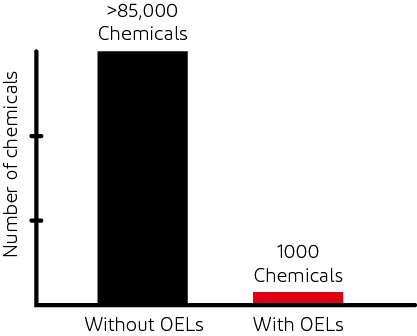
Occupational exposure limits (OELs) have long guided occupational hygiene by defining safe exposure levels intended to protect workers from harmful chemical exposures.1 However, the rapid introduction of new chemical substances has far outpaced the development of authoritative OELs. Of the > 85,000 chemicals currently in commercial use, only approximately 1,000 have established OELs, resulting in significant gaps in exposure guidance and risk management decision-making.2
To address this gap, industry uses complementary tools:
- Occupational Exposure Banding (OEB): A hazard-based approach that groups chemicals into toxicity bands and provides exposure ranges.
- Control Banding (CB): A task-based approach that combines hazard severity and exposure potential to recommend specific controls (e.g., ventilation, enclosure, containment, and PPE/CPC).
In simple terms, OEB tells you how hazardous the substance is, and Control Banding tells you how the task should be controlled. These tools help assess risk, but do not by themselves select chemical protective clothing
II. Why are alternative approaches needed?
To address limitations associated with occupational exposure limits (OELs), Occupational Exposure Banding (OEB) and Control Banding (CB) provide a practical, structured framework to support risk-based decision-making when OELs are missing, incomplete, or still under development.
III. OEB vs Control Banding: What Each Tool Does
1.1 Occupational Exposure Banding (OEB) - Hazard-based
Occupational Exposure Banding (OEB) is a hazard-based approach that uses available toxicological data to group substances into inhalation exposure ranges, supporting occupational risk assessment and risk management decisions. OEB is not task-specific, does not prescribe control measures, and does not address dermal exposure or chemical protective clothing selection.3 Use OEB to answer: “What is the relative hazard level of this substance, and which inhalation exposure band applies?”
Use OEB to answer: “What is the relative hazard level of this substance, and which inhalation exposure band applies?”

Figure 1: Occupational exposure bands [McKernan et al. 2016].
1.2 Control Banding (CB) - Task-based
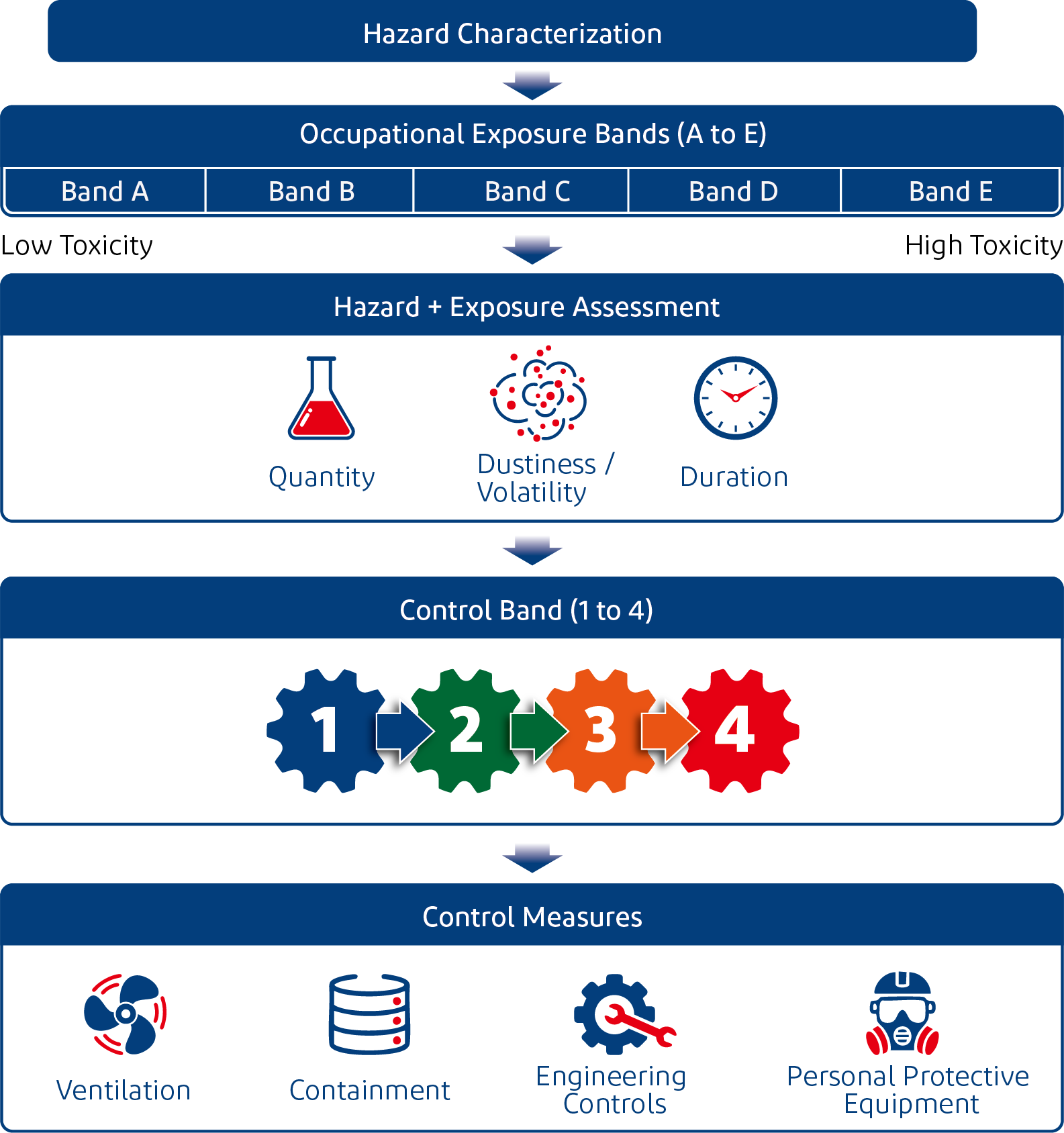
Control Banding (CB) integrates hazard information with task-specific exposure determinants such as the quantity handled, dustiness or volatility, and duration of activity to estimate potential exposure.
Based on this integration, Control Banding provides general recommendations on the appropriate stringency of control measures, including engineering controls such as ventilation, enclosure, and containment, as well as administrative and personal protective measures.
Control Banding (CB) does not specify the type or performance requirements of chemical protective clothing. These elements require separate, detailed assessment.
Use Control Banding to answer:
"Given a defined hazard and exposure scenario, what level of control is appropriate?"
Example: Process Control Banding
Figure 2: Adapted from: Control Banding: Pharmaceutical Caterpillar to Mainstream IH Butterfly By Ernest Sullivan, PhD, CIH, ROH, CChem and Om Malik, PhD, CIH, ROH, PEng AIHA Diplomate Article
IV. Summary
Occupational exposure bands define protective air concentration ranges and guide respiratory protection selection. However, OEB does not directly determine the selection of chemical protective clothing.
Similarly Control banding was developed by the pharmaceutical industry to manage risks from chemicals with limited toxicity data by assigning them to hazard bands with corresponding control measures. Control banding does not replace occupational safety and health experts and may prompt the need for specialist support.
How hazard assessment translates into controls and CPC selection:
Chemical protective clothing (CPC) is not directly or explicitly assigned based on Occupational Exposure Band (OEB) categories or Control Banding (CB) outcomes. While Control Banding approaches may indicate the potential need for personal protective measures, they do not define the type, material, or performance requirements of chemical protective clothing.
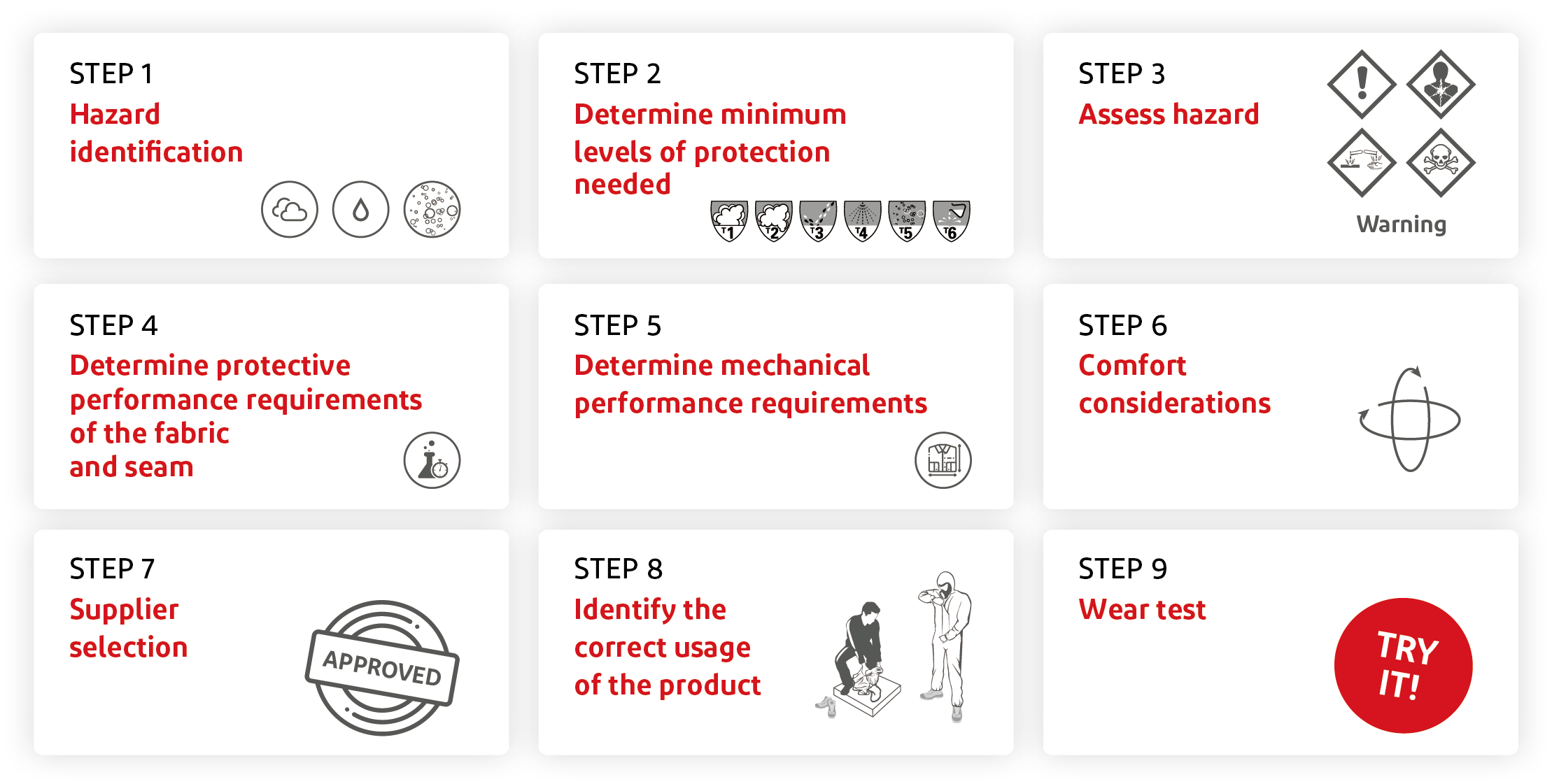
DuPont’s 9-step process provides a structured framework that may be applied to support chemical protective clothing decision-making.
As part of a comprehensive risk management assessment, the following questions may be considered when selecting appropriate chemical protective clothing:









Workers may encounter a wide range of workplace and environmental hazards that vary in type, physical form, and exposure conditions. Resulting risk levels are influenced by factors such as concentration, temperature, pressure, and the physical state of the hazard.
Selection of appropriate chemical protective clothing (CPC) must therefore be chemical-specific and based on material performance, the defined exposure scenario, and the results of a risk assessment. This evaluation may be supported by a structured framework, such as DuPont’s 9-step process.
V. Garment selection
DuPont’s 9-step guide: DuPont offers the web-based SafeSPEC™ tool to support chemical protective clothing (CPC) decision-making within a structured risk assessment framework.4
References:
- Schulte et al. 2010; Nikfar and Malekirad 2014; Skowroń and Czerczak 2015; Deveau et al. 2015; Cook 1987; Paustenbach 1998
- NIOSH. Occupational Exposure Banding. Centers for Disease Control and Prevention (CDC). https://www.cdc.gov/niosh/exposure-banding/about/index.html
- Canadian Centre for Occupational Health and Safety (CCOHS). Control Banding. https://www.ccohs.ca/oshanswers/chemicals/control_banding.pdf
- https://www.dupont.com.au/knowledge/chemical-risk-assessment.html
About DuPont Personal Protection
DuPont is committed to developing innovative solutions rooted in responsibility, foresight, and collaboration. Guided by our core values—Safety and Health, Respect for People, Highest Ethical Behavior, Continuous Growth and Improvement to solve the world’s challenges—we see safety not merely as a priority, but as a strategic business value and a foundational pillar of our operations and management philosophy.
DuPont Personal Protection is a global leader in chemical protective clothing, serving industrial, life sciences, and emergency response professionals. Focused on providing trusted personal protection, the business empowers workers to safely perform tasks ranging from the mundane to the extraordinary. Home to some of the industry’s most trusted brands—including Tyvek®, Tychem®, and ProShield®—DuPont Personal Protection delivers durable barrier protection through advanced fabric technologies, thoughtful garment design, and customer-driven innovation.
Supported by a broad distribution network and expert field support, DuPont Personal Protection remains firmly committed to a simple belief: every worker deserves trusted protection at every stage of their work.


This information is based upon technical data that DuPont believes to be reliable. It is subject to revision as additional knowledge and experience become available. It is the user’s responsibility to determine the level of toxicity, and the proper personal protective equipment needed. The information set forth herein reflects laboratory performance of fabrics, not complete garments, under controlled conditions. This information is intended for use by persons having the technical expertise to undertake evaluation under their own specific end-use conditions, at their own discretion and risk. Anyone intending to use this information should first check that the garment selected is suitable for the intended use. The end-user should discontinue use of garment if fabric becomes torn, worn or punctured, to avoid potential chemical exposure. Since conditions of use are beyond our control, DUPONT DE NEMOURS AND ITS AFFILIATES MAKE NO WARRANTIES, EXPRESSED OR IMPLIED, INCLUDING BUT NOT LIMITED TO WARRANTIES OF MERCHANTABILITY OR FITNESS FOR A PARTICULAR PURPOSE AND ASSUME NO LIABILITY IN CONNECTION WITH ANY USE OF THESE PRODUCTS AND INFORMATION. This information is not intended as a license to operate under or a recommendation to infringe any trademark, patent or technical information of DuPont or other persons covering any material or its use.