


The Challenge of Decontamination for Chemical Protective Clothing
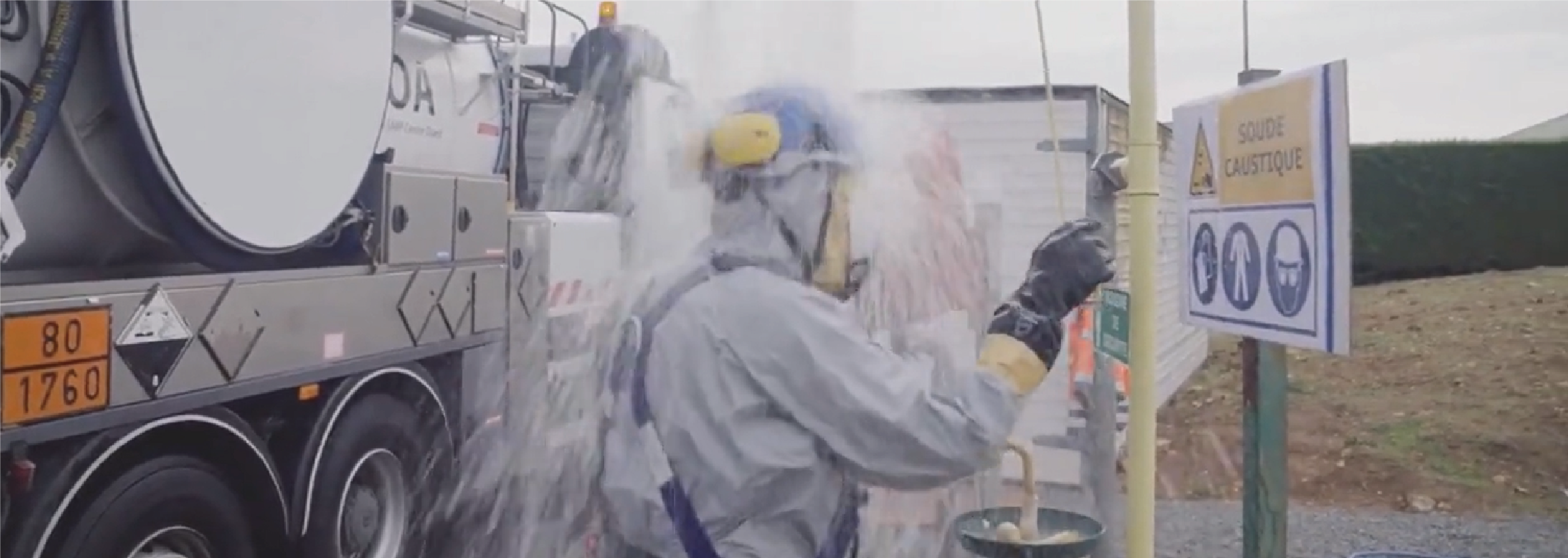
Wearing chemical protective clothing (CPC) is only one part of chemical exposure control. The doffing process is also critical to minimize the risk of contaminants on the surface of CPC transferring to skin or inner clothing. Therefore, field decontamination is a recommended process to protect worker health and safety by reducing potential contact with contaminants on the PPE surface during doffing.
I. Common Misconception About Decontamination
A common misconception is that field decontamination is required only in emergency response scenarios or for Type 1 or Type 1-ET garments. In reality, any worker exposed to hazardous chemicals — whether liquid, gas, particulate, or microbiological — may require decontamination to reduce the risk of secondary exposure during PPE removal.
For example, in wind blade manufacturing, workers often wear Type 5 protective garments to protect against fine fiberglass and resin dust generated during grinding and finishing operations. During PPE removal, particulate contamination on the PPE surface may become airborne, resulting in skin and inhalational exposure; particles adhering on inner clothing or hair may also be transported beyond the work area, creating a potential for secondary exposure. In such cases, air shower may be considered as an engineering control to reduce the particulate contamination prior to doffing
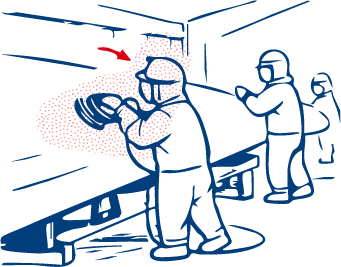
<span class="fontsize20">Workplace Dust </span>
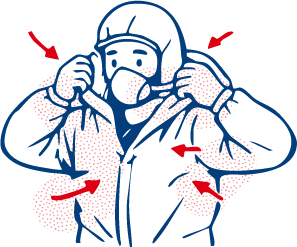
<span class="fontsize20">Doffing Protective Clothing </span>
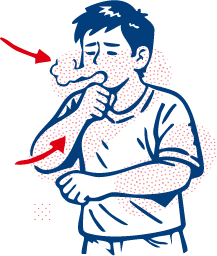
<span class="fontsize20">Skin and Respiratory Contamination </span>
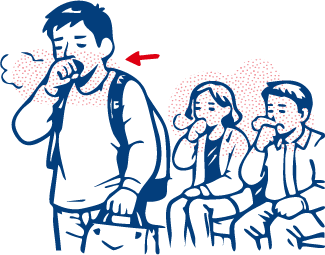
<span class="fontsize20">Spreading to Public Areas </span>
II. The Purpose of Decontamination
In general, there are two types of decontamination: field decontamination and garment decontamination. These serve different purposes
Field Decontamination
The purpose of field decontamination is to reduce the concentration of contaminants on the PPE surface to a level that allows safe doffing.
Garment Decontamination
In addition to field decontamination, garment decontamination aims to eliminate chemicals completely from the garment. The objective is to ensure that no hazardous chemical residue remains for future use.
These two types of decontamination have different objectives and therefore require different acceptance criteria and verification approaches. A decontamination process that is adequate for safe doffing may be insufficient for garment reuse, particularly when contaminants can permeate into fabrics, seams, or accessories.
III. Decontamination Methods
At a high level, decontamination is accomplished by physically removing contaminants, chemically converting them to a less hazardous form, or combining both approaches. Below are the regular decontamination methods for reference.
Physical removal
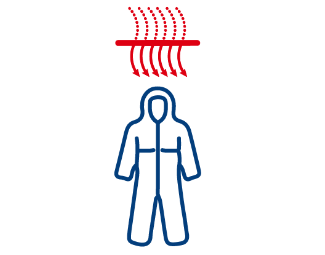
<span class="fontsize20">Water Rinsing</span>

<span class="fontsize20">Scraping</span>

<span class="fontsize20">Wiping Off </span>

<span class="fontsize20">Air Shower </span>
Chemical reaction

<span class="fontsize20">Neutralization</span>
<span class="fontsize20">Oxidation/Reduction </span>

<span class="fontsize20">Dissolution </span>
<span class="fontsize20">Disinfection </span>
IV. Decontamination Agent Selection
Field decontamination agent selection should be guided by hazard assessment and professional judgment. The goal is to reduce risk—without introducing any new hazards or degrading PPE material.
Key considerations include the exposure scenario, the physical and chemical properties of contaminants (e.g., state, temperature, concentration, water-soluble or reactive), the potential for hazardous reactions during decontamination, and the compatibility of the decontamination agent with the PPE materials. Any selected agent should be compatible with PPE to avoid chemical reaction and/or material degradation that could reduce protective performance and lead to secondary exposure.
For example, high-concentration sulfuric acid can generate significant heat upon contact with water, which is a well-known exothermic reaction. As a result, if a garment is heavily contaminated with this kind of chemical, there is a risk of damage during decontamination with water or water-based agents. In such cases, it is advisable to remove any excess water-reactive chemicals with absorbent materials — such as spill absorbent cotton or other non-reactive absorbents — rather than applying a water or water-based decontamination procedure directly.
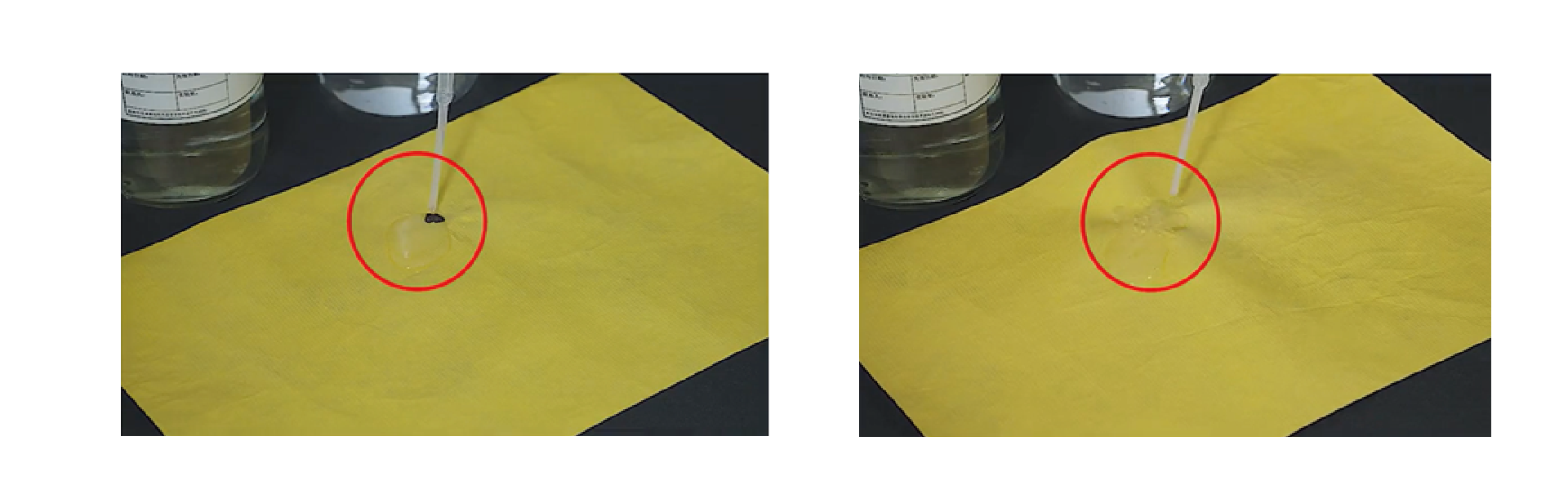
Figure 1. Exothermic reaction caused by contact between 98% H2SO4 and water
Watch #GetTheFacts Video: What Happens When Sulfuric Acid Contaminated Clothing Is Rinsed with Water?
The table below provides a general guide to the solubility of several contaminant categories in four types of solvents: water, dilute acids, dilute bases, and organic solvents. Due to the potential hazards involved, chemical decontamination should be performed only when recommended by an industrial hygienist or other qualified health professional.
| SOLVENT | SOLUBLE CONTAMINANTS |
|---|---|
| Water | Low-chain hydrocarbons Inorganic compounds Salts Some organic acids and other polar compounds |
| Dilute Acids | Basic (caustic) compounds. Amines Hydrazines |
| Dilute Bases For example:
|
Acid compounds Phenols Thiols Some nitro and sulfonic compounds. |
| Organic Solvents* For example:
|
Nonpolar compounds (e.g., some organic compounds). |
*WARNING: Some organic solvents can permeate and/or degrade the protective clothing.
Figure 2. General Guide to Solubility of Contaminants In Four Solvent Types
Source: OSHA - Decontamination
For garment decontamination of reusable garments, users should refer to the manufacturer’s guidance and Instructions for Use (IFU).
V. Challenges for Reusable Garments
As we know, a garment's protective performance may be compromised after exposure to chemicals. Physically, micro-cracks, material thinning, or other forms of damage may occur. Chemically, the fabric may be degraded by the chemical, and hazardous substances may permeate into the material.
This raises a critical question: how can we confirm whether a garment can be reused safely?
The best approach is to follow the guidance and IFU provided by the manufacturer of reusable garment, including any stated limitations or guarantees regarding protection performance after decontamination. However, in many cases, manufacturers do not provide validated decontamination methods for specific chemical exposures or use scenarios.
As a result, the responsibility often falls on end users to establish and validate decontamination processes intended to support garment reuse. Normally, visual inspection or simple tests are often used. These methods may detect visible damage and chemical residual on the surface. However, they cannot detect micro-cracks and chemical residues within materials.
Physical performance test and component analysis test can provide more definitive results, but such testing is generally destructive. Even when testing shows no chemical residues on or within the fabric, the garment cannot be reused since it has been destroyed during testing.
VI. Conclusion
Field decontamination is a critical control measure to protect the health and safety of workers during PPE doffing following exposure to hazardous chemicals. A thorough risk assessment is essential before decontamination to assess whether the selected process and agent are appropriate for the specific chemicals/PPE/exposure conditions.
For reusable CPC, additional garment decontamination is required to fully remove residual chemicals prior to future use, and appropriate verification is necessary to assess the effectiveness. In the absence of validated decontamination and verification methods, reuse of chemical protective garments should be avoided due to the potential risk of residual chemical exposure.
About DuPont Personal Protection
DuPont is committed to developing innovative solutions with purpose, foresight, and collaboration at the core. Guided by our fundamental values—Safety and health, Respect for people, Highest ethical behavior, Protecting the planet—we believe safety is not just a priority, but a strategic business value. It stands as one of the four pillars of our operations and management philosophy.
DuPont Personal Protection is recognized as one of the most trusted brands in the personal protective equipment (PPE) industry. We understand that those who work with or around hazardous substances every day need absolute confidence in their protective apparel. That’s why DuPont™ Tyvek®, Tychem®, and ProShield® garments are engineered to deliver superior protection for frontline workers, combining long-lasting barrier performance with exceptional comfort through advanced fabric technology and seam design.
Every hero deserves protection. DuPont Personal Protection is dedicated to safeguarding every step of your journey.


This information is based upon technical data that DuPont believes to be reliable. It is subject to revision as additional knowledge and experience become available. It is the user’s responsibility to determine the level of toxicity, and the proper personal protective equipment needed. The information set forth herein reflects laboratory performance of fabrics, not complete garments, under controlled conditions. This information is intended for use by persons having the technical expertise to undertake evaluation under their own specific end-use conditions, at their own discretion and risk. Anyone intending to use this information should first check that the garment selected is suitable for the intended use. The end-user should discontinue use of garment if fabric becomes torn, worn or punctured, to avoid potential chemical exposure. Since conditions of use are beyond our control, DUPONT DE NEMOURS AND ITS AFFILIATES MAKE NO WARRANTIES, EXPRESSED OR IMPLIED, INCLUDING BUT NOT LIMITED TO WARRANTIES OF MERCHANTABILITY OR FITNESS FOR A PARTICULAR PURPOSE AND ASSUME NO LIABILITY IN CONNECTION WITH ANY USE OF THESE PRODUCTS AND INFORMATION. This information is not intended as a license to operate under or a recommendation to infringe any trademark, patent or technical information of DuPont or other persons covering any material or its use.